Mastering JavaScript Arrays: A Deep Dive into Modern Data Manipulation and Performance
Introduction to Modern JavaScript Arrays
In the vast ecosystem of web development, few data structures are as fundamental and versatile as the JavaScript Array. Whether you are building a simple interactive widget or a complex enterprise application using the MERN Stack, understanding arrays at a deep level is non-negotiable. Unlike static arrays in lower-level languages like C or Java, JavaScript Arrays are dynamic, high-level, list-like objects that come packed with prototype methods designed for powerful data manipulation.
As Modern JavaScript has evolved from ES5 to JavaScript ES2024, the array API has grown significantly. We have moved past the days of verbose for loops and manual index tracking. Today, developers rely on declarative functional programming patterns to write Clean Code JavaScript that is both readable and efficient. From handling REST API JavaScript responses to managing state in a React Tutorial, arrays are the vessel through which data flows.
This comprehensive guide will take you beyond the basics. We will explore advanced iteration techniques, asynchronous array processing, memory management with Typed Arrays, and how to leverage modern methods to handle complex data structures found in Full Stack JavaScript applications. Whether you are a beginner looking for a JavaScript Tutorial or a senior engineer optimizing JavaScript Performance, this article covers the essential patterns for mastering arrays.
Section 1: Core Concepts and Functional Transformations
At their core, arrays in JavaScript are specialized objects where keys are indices. However, their true power lies in the Array.prototype methods. The shift towards functional programming in JavaScript ES6 introduced methods that allow developers to transform data without mutating the original source—a key concept in Redux and React state management.
Declarative vs. Imperative Programming
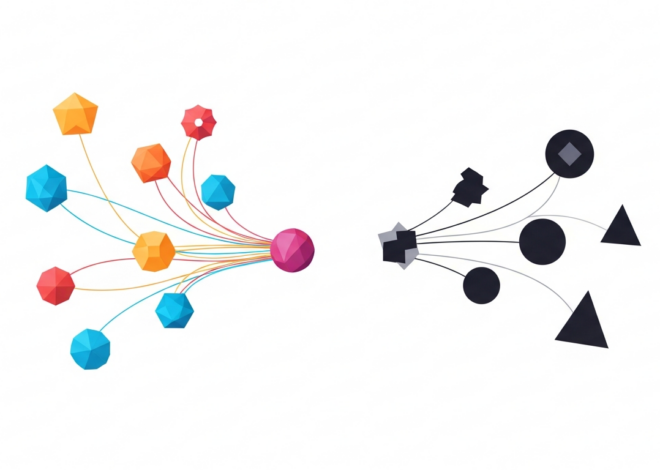
Historically, developers used imperative loops to process lists. While performant, they are prone to “off-by-one” errors and are harder to read. Modern development favors declarative methods like .map(), .filter(), and .reduce(). These methods abstract the iteration logic, allowing you to focus on the business logic of the data transformation.
Let’s look at a practical example involving data transformation. Imagine we are building a dashboard and receive a raw list of user objects from a Node.js JavaScript backend. We need to filter for active users, normalize their data, and calculate a metric.
// Simulating a response from a REST API JavaScript endpoint
const rawUserData = [
  { id: 1, name: 'Alice', role: 'admin', logins: 45, status: 'active' },
  { id: 2, name: 'Bob', role: 'user', logins: 12, status: 'inactive' },
  { id: 3, name: 'Charlie', role: 'user', logins: 23, status: 'active' },
  { id: 4, name: 'Dave', role: 'moderator', logins: 5, status: 'active' }
];

// functional pipeline using chaining
const processUserStats = (users) => {
  return users
    .filter(user => user.status === 'active') // 1. Filter active users
    .map(user => ({
      // 2. Transform/Normalize data (Clean Code JavaScript pattern)
      userId: user.id,
      displayName: user.name.toUpperCase(),
      score: user.logins * 10,
      accessLevel: user.role === 'admin' ? 3 : 1
    }))
    .reduce((acc, curr) => {
      // 3. Aggregate data
      acc.totalScore += curr.score;
      acc.activeCount++;
      acc.users.push(curr);
      return acc;
    }, { totalScore: 0, activeCount: 0, users: [] });
};

const dashboardData = processUserStats(rawUserData);
console.log(dashboardData);
/*
Output:
{
  totalScore: 730,
  activeCount: 3,
  users: [ ...processed user objects... ]
}
*/
Understanding reduce Deeply
The reduce method is often the most intimidating for beginners in a JavaScript Basics course, but it is the Swiss Army knife of array methods. As shown above, it can transform an array into an object, a primitive, or even a completely different array structure. When working with TypeScript, defining the accumulator’s type explicitly is a JavaScript Best Practice to ensure type safety throughout the reduction process.
Section 2: Advanced Data Manipulation and Flattening

In real-world scenarios, data rarely comes in a perfectly flat list. When working with complex GraphQL JavaScript queries or parsing CSV files, you often encounter nested arrays. Before JavaScript ES2019, developers had to rely on recursive functions or libraries like Lodash to flatten these structures. Now, we have native solutions.
Handling Nested Structures
The .flat() and .flatMap() methods are game-changers for data cleaning. If you are processing a tree structure or handling bulk exports where arrays are nested inside arrays, flat() allows you to normalize this data instantly. You can specify a depth, or use Infinity to completely flatten a structure of unknown depth.
This is particularly useful in Data Manipulation tasks where you need to prepare data for visualization in libraries like D3.js or for table rendering in a Vue.js Tutorial.
// Scenario: Processing CSV parsing results where rows might contain lists of tags
const csvParseResult = [
  ['id', 'tags'],
  [1, ['javascript', 'web']],
  [2, ['css', ['tailwind', 'sass']]], // Deeply nested
  [3, 'html']
];

// A utility function to clean and normalize tags
const extractUniqueTags = (data) => {
  // Remove header row
  const rows = data.slice(1);

  // Get just the tags column (index 1)
  const rawTags = rows.map(row => row[1]);

  // Flatten recursively to handle any depth of nesting
  const flatTags = rawTags.flat(Infinity);

  // Remove duplicates using Set and return a clean array
  return [...new Set(flatTags)];
};

const allTags = extractUniqueTags(csvParseResult);
console.log(allTags);
// Output: ["javascript", "web", "css", "tailwind", "sass", "html"]
Searching and Sorting with Modern APIs
Modern JavaScript has also improved how we find and organize data. While indexOf was the standard for years, find and findIndex allow for predicate-based searching. Furthermore, the recent addition of toSorted() and toSpliced() (part of JavaScript ES2023) addresses a long-standing complaint: mutation.
Standard sort() mutates the array in place, which causes bugs in frameworks like React where immutability is required for change detection. toSorted() returns a new array, leaving the original distinct. This is a crucial JavaScript Tip for maintaining predictable state in Redux or Context API.
Section 3: Async Operations, DOM, and Performance
Arrays are not just for static data; they are integral to Async Await patterns and JavaScript DOM manipulation. A common pattern in Full Stack JavaScript is fetching a list of resources concurrently.
Async Iteration
A common pitfall is trying to use forEach or map with async callbacks and expecting the code to pause. Array methods are synchronous. To handle asynchronous operations over an array, you must use Promise.all. This is essential for JavaScript Optimization when making multiple API calls, as it allows requests to run in parallel rather than sequentially.
// Async function to fetch data for multiple endpoints
async function fetchDashboardWidgets(widgetIds) {
  const apiBase = 'https://api.example.com/widgets';

  try {
    // Map returns an array of Promises
    const promiseArray = widgetIds.map(async (id) => {
      const response = await fetch(`${apiBase}/${id}`);
      if (!response.ok) throw new Error(`Failed to load widget ${id}`);
      return response.json();
    });

    // Wait for all promises to resolve
    const widgets = await Promise.all(promiseArray);

    return widgets;
  } catch (error) {
    console.error("Error in batch fetch:", error);
    return [];
  }
}

// Usage within a main function
(async () => {
  const ids = [101, 102, 105];
  const data = await fetchDashboardWidgets(ids);
  renderWidgetsToDOM(data);
})();
DOM Manipulation and Security
When rendering arrays to the DOM, developers must be wary of JavaScript Security risks, specifically Cross-Site Scripting (XSS). While frameworks like Angular or Svelte handle escaping automatically, vanilla JavaScript DOM manipulation requires care. Never use innerHTML with user-generated content from an array. Instead, use document.createElement or textContent.

function renderWidgetsToDOM(widgets) {
  const container = document.getElementById('widget-container');
  container.innerHTML = ''; // Clear loading state

  // Using DocumentFragment for JavaScript Performance (minimizes reflows)
  const fragment = document.createDocumentFragment();

  widgets.forEach(widget => {
    const card = document.createElement('div');
    card.className = 'widget-card';

    const title = document.createElement('h3');
    title.textContent = widget.title; // Safe from XSS

    const value = document.createElement('p');
    value.textContent = `Current Value: ${widget.value}`;

    card.append(title, value);
    fragment.append(card);
  });

  container.append(fragment);
}
Performance: Typed Arrays
For standard web apps, standard arrays are sufficient. However, if you are working with WebGL, Three.js, or doing heavy JavaScript Animation, standard arrays are too memory-heavy. This is where Typed Arrays (like Float32Array or Uint8Array) come in. They provide a mechanism for accessing raw binary data, similar to arrays in C.
Typed arrays are a critical component of Web Performance when processing audio data, manipulating canvas pixels, or handling binary data via WebSockets.
Section 4: Best Practices and Modern Ecosystems
To write professional-grade code, you must integrate array handling with the broader ecosystem of JavaScript Tools.
TypeScript and Type Safety
In a TypeScript Tutorial context, arrays should always be typed. Using Array<Type> or Type[] prevents runtime errors. When using mixed arrays (tuples), TypeScript enforces the order and type of elements, which is invaluable for JavaScript Testing with tools like Jest Testing.
Immutability in Frameworks

Whether you use React, Vue.js, or Svelte, treating arrays as immutable is a best practice. Mutating methods (push, pop, splice) can lead to UI bugs where the view fails to update. Always prefer spread syntax (...) or methods that return new arrays.
// BAD: Direct mutation in React state
// state.items.push(newItem);

// GOOD: Immutability using Spread Operator
const addItem = (currentState, newItem) => {
  return [...currentState, newItem];
};

// GOOD: Removing an item without splice
const removeItem = (currentState, idToRemove) => {
  return currentState.filter(item => item.id !== idToRemove);
};

// GOOD: Updating a specific item
const updateItem = (currentState, updatedItem) => {
  return currentState.map(item =>
    item.id === updatedItem.id ? updatedItem : item
  );
};
Build Tools and Polyfills
When using modern features like toSorted() or findLast(), ensure your build pipeline (using Vite, Webpack, or other JavaScript Bundlers) is configured to transpile code for older browsers if necessary. While modern browsers support these features, enterprise environments may require polyfills via NPM packages.
Conclusion
The JavaScript Array is a deceptively simple structure that powers the modern web. From the declarative elegance of map and reduce to the structural utility of flat, mastering these tools is essential for any developer. We have explored how to handle JavaScript JSON data, manage asynchronous flows with Promises, and interact with the DOM securely and efficiently.
As you continue your journey—perhaps exploring Progressive Web Apps or server-side logic with Express.js—remember that clean data manipulation is the foundation of a stable application. Embrace immutability, leverage modern ES2024 features, and always consider the performance implications of your loops. By applying these JavaScript Best Practices, you elevate your code from merely functional to professional and scalable.
To further your skills, try refactoring an old project using these modern array methods, or explore Service Workers to see how arrays handle caching strategies in offline-first applications. The capabilities of JavaScript arrays are vast, and mastering them is a continuous, rewarding process.